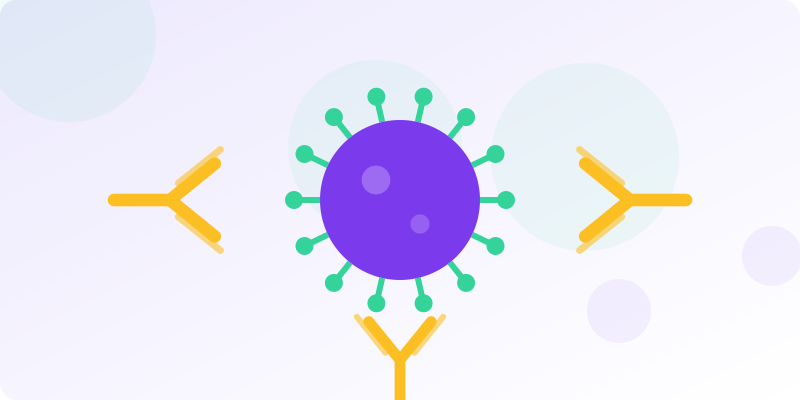
A common belief is that viruses naturally evolve to become milder, because killing or incapacitating a host is supposedly bad for the virus. It is an intuitive story, and sometimes something like it does happen. But evolutionary biologists have long cautioned that it is not a rule. Understanding why helps make sense of how SARS-CoV-2 has changed and why vigilance remains reasonable.
What "Virulence" Means
In evolutionary biology, virulence refers to the harm an infection causes its host. It is not a trait the virus "wants" to increase or decrease. Instead, virulence is shaped indirectly by how it relates to the virus's ability to spread. Natural selection favors whatever helps a virus produce more onward infections, and severity changes only insofar as it is linked to that.
The Trade-Off Idea
A widely discussed framework is the transmission–virulence trade-off. Replicating to higher levels within a host may make a virus more transmissible, but it might also make the host sicker, potentially shortening the period during which the host can spread it, for example by confining them to bed. Under this model, selection pushes virulence toward an intermediate level that balances the two, which is not necessarily low.
The classic example is the myxoma virus released to control rabbit populations in Australia. Over time, less lethal strains became common, but the virus did not become harmless. It settled at a level that still caused substantial disease, while rabbits also evolved resistance. The case is often cited as both support for the trade-off idea and a warning against assuming a slide toward harmlessness.
Why Severity Can Be Weakly Linked to Spread
For many respiratory viruses, much transmission can happen early in infection, sometimes before symptoms appear or while they are still mild. Severe illness often develops later, after the peak of transmission. When that is true, the virus faces little selective pressure related to severity at all, because severe outcomes come too late to affect how many people it infects.
In that situation, severity can drift up or down as a side effect of other changes. A variant could become more or less severe without selection pushing in either direction.
What SARS-CoV-2 Has Shown
The SARS-CoV-2 story does not follow a simple downward line. Some earlier variants were associated with more severe illness than the original virus, according to studies at the time, before Omicron lineages emerged. Omicron infections were generally associated with lower risk of severe outcomes than Delta, as discussed in our comparison of Omicron and Delta symptoms.
Researchers caution against attributing that change only to the virus itself. Much of the reduction in severe outcomes across the population reflects widespread immunity from vaccination and prior infection, along with improved treatment. Lab studies also suggested that Omicron's preference for certain entry routes may have influenced which tissues it infected most readily. Separating the virus's intrinsic severity from changes in the people it infects is difficult.
The Role of Immunity
When most people have some immunity, a virus that evades antibodies more effectively gains an advantage, whatever its effect on severity. Selection in an immune population therefore tends to favor immune escape and transmissibility. Severity is, again, a by-product. Our article on what Omicron taught us about coronavirus evolution explores how these pressures played out.
So Is Milder Evolution Guaranteed?
No. Evolutionary theory and real-world examples both show that virulence can rise, fall or stay steady depending on the biology of transmission and the host population. Some viruses have become less harmful over long periods of coexistence with their hosts, while others have not. Many factors, including host genetics and immunity, contribute to how severe infections look over time.
For individuals, this is why guidance from healthcare providers and public health authorities remains the best basis for decisions. Severity at a population level says little about any one person's risk, which depends heavily on age, health conditions and immune history.
Key takeaways
- Viruses evolve to spread, not to become milder.
- Severity changes mainly as a side effect of traits linked to transmission.
- When transmission happens before severe illness, selection on severity is weak.
- Lower severe-outcome rates for SARS-CoV-2 reflect both viral changes and population immunity.
Educational information only, not medical advice. For questions about testing, vaccination or treatment, follow the advice of a qualified healthcare professional and your local public health authority; in an emergency call your local emergency number.